
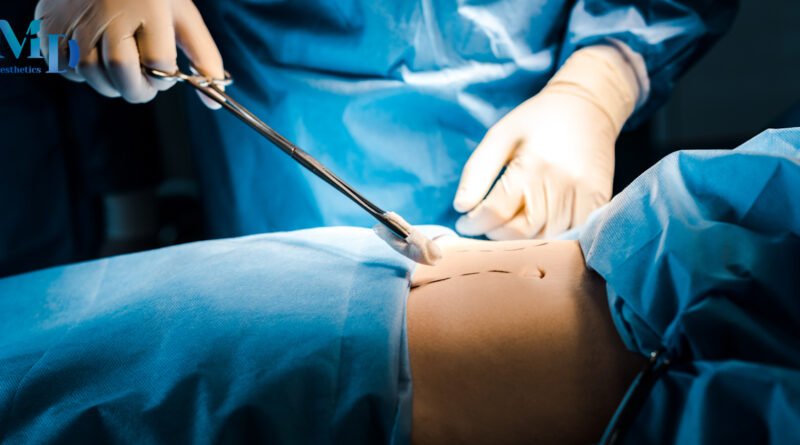
Vaser Liposuction in Turkey: Ultrasound-Assisted Fat Removal and Body Contouring
Localized fat deposits do not always respond to changes in diet or exercise. Their distribution is influenced by genetics, hormonal factors and individual anatomy, which means certain areas may retain fullness even at a stable body weight. Patients researching Vaser liposuction in Turkey are often interested in a technique that uses ultrasound energy to assist fat removal. Understanding how this technology works, where it may be useful and what it cannot achieve is essential before considering treatment.
What Is Vaser Liposuction?
VASER stands for Vibration Amplification of Sound Energy at Resonance. It is an ultrasound-assisted liposuction technology used to help break up fat tissue before removal.
During treatment, ultrasound energy is delivered through a specialized probe introduced beneath the skin. The energy assists in disrupting fat tissue, which is then removed using suction.
VASER is a method of performing liposuction rather than a separate category of weight-loss surgery.
Its primary purpose is to reduce selected deposits of subcutaneous fat and improve body contour.
How Does Ultrasound-Assisted Liposuction Work?
The procedure begins with an assessment of the areas requiring treatment.
After anesthesia and preparation, a fluid solution is introduced into the targeted tissues. An ultrasound probe is then used to assist fat disruption before the surgeon removes the treated fat through a cannula.
The exact technique, amount of fat removed and treatment duration depend on the patient’s anatomy and surgical plan.
Ultrasound assistance can be useful during selected contouring procedures, but it does not eliminate the need for surgical expertise.
Does Vaser Liposuction Tighten Skin?
Some patients associate ultrasound-assisted liposuction with substantial skin tightening.
However, VASER liposuction should not be considered a substitute for surgical skin removal.
Skin contraction after fat reduction depends on elasticity, age, tissue quality and the amount of volume removed.
Patients with significant loose skin may require an additional procedure, such as abdominoplasty or a body lift.
Which Body Areas Can Be Treated?
The technique may be considered for several regions where localized fat affects body proportions.
Common treatment areas include:
- Abdomen
- Waist and flanks
- Back
- Upper arms
- Thighs
- Chest
- Selected areas around the knees
The suitability of each area depends on fat thickness, skin condition and surrounding anatomy.
A consultation should establish whether liposuction alone can achieve a meaningful improvement.
Vaser Liposuction Versus Traditional Liposuction
Traditional suction-assisted liposuction removes fat through mechanical movement and suction.
VASER-assisted liposuction adds an ultrasound-based fat-disruption stage before extraction.
Both approaches can reduce localized fat deposits, and both require careful surgical planning.
The choice between them should not be based solely on technology branding.
Surgeon experience, patient selection, the amount of fat being removed and overall safety are important considerations.
Research comparing techniques does not establish that one method consistently produces superior results for every patient.
Is Vaser Liposuction Suitable for Weight Loss?
Liposuction is intended for body contouring rather than the treatment of obesity.
Although fat is physically removed during surgery, the amount of weight lost is not comparable to medically supervised weight-management treatment.
Patients who are actively trying to lose substantial amounts of weight may benefit from achieving a more stable weight before considering contouring surgery.
The best candidates generally have localized fat deposits and realistic expectations about the achievable changes.
High-Definition Body Contouring
Some patients seek more visible definition around the abdomen, chest or waist.
High-definition liposuction involves selective fat removal intended to emphasize existing anatomical contours.
However, this approach is not appropriate for every patient.
Muscle development, fat distribution, skin thickness and overall body composition influence the possible result.
Excessive fat removal can produce unnatural transitions, visible irregularities or unwanted depressions.
The goal should be a contour compatible with the patient’s anatomy rather than an identical result across different body types.
What Happens During Recovery?
Swelling, bruising, tenderness and temporary numbness are common after liposuction.
Compression garments may be recommended to support the treated areas during early recovery.
Patients are generally encouraged to begin gentle walking according to medical advice.
Strenuous exercise and heavy physical activity are restricted until the surgeon determines that healing is sufficient.
How Long Does Swelling Last?
Swelling gradually decreases over several weeks, although some residual swelling may persist for months.
The final appearance cannot be accurately judged immediately after surgery.
Tissue healing, postoperative fluid changes and skin adaptation all influence the developing contour.
Potential Risks of Vaser Liposuction
Ultrasound-assisted liposuction carries many of the risks associated with other liposuction techniques.
These include bleeding, infection, fluid accumulation, contour irregularities, changes in sensation and anesthesia-related complications.
Ultrasound energy also introduces a potential risk of thermal injury if the equipment is used improperly.
Other serious complications, including blood clots and fat embolism, are uncommon but possible.
The use of advanced equipment does not make the operation risk-free.
Maintaining Results After Surgery
Fat cells removed through liposuction do not regenerate in the same way as ordinary temporary weight changes. However, remaining fat cells can enlarge when body weight increases.
Future weight gain may therefore alter the contour.
Stable weight, regular physical activity and appropriate nutrition can help preserve the result.
Patients should also recognize that aging and changes in skin elasticity continue after surgery.
Planning Vaser Liposuction in Istanbul
International patients considering Vaser liposuction in Istanbul should examine the surgeon’s qualifications, treatment setting and postoperative arrangements.
The consultation should establish which areas will be treated, whether skin laxity is present and what degree of improvement is realistic.
Patients should also ask about anesthesia, compression garments, recovery restrictions and the recommended period before flying home.
A well-organized treatment plan includes follow-up care rather than focusing exclusively on the operation.
Making an Informed Body Contouring Decision
VASER technology can assist fat removal in selected body areas, but successful treatment depends on appropriate patient selection and careful surgical execution. It cannot replace weight management, remove substantial excess skin or guarantee a particular body shape.
Patients researching ultrasound-assisted liposuction and surgical body contouring can find additional information at https://muratdiyarbakirlioglu.com/en/. A detailed medical assessment can help determine whether VASER liposuction, another liposuction technique or a skin-removal procedure is most appropriate for their concerns.